Co-Living Operator in London
DIFFRENT Living is a co-living operator in London and the South East for property owners, institutional investors and developers. We provide operational design, mobilisation, lease-up, revenue management, day-to-day operations and owner reporting, under an owner’s brand or the separately licensed DIFF_RENT brand.
London & the South East
Operating in the markets we know.

The London co-living sector has matured from a niche concept into an established institutional asset class. As development pipelines complete and assets transition from construction to operation, the demand for specialist operators who understand both the resident experience and the property P&L has never been higher.
What a Specialist Co-Living Operator Does
Operating a co-living asset is fundamentally different from traditional block management or student accommodation. It requires a hospitality mindset combined with rigorous residential asset management discipline. A specialist co-living operator is responsible for the entire resident journey, while continuously optimising Net Operating Income (NOI) for the asset owner.
The role encompasses operational design consulting during development, meticulous pre-opening mobilisation, aggressive initial lease-up, and ongoing building operations. The objective is not simply full occupancy, but optimising the relationship between achieved rent, occupancy levels, operational expenditure, and resident retention.
An operator acts as the custodian of the asset's value. Where traditional property managers may focus purely on statutory compliance and collecting rent, a co-living operator drives top-line revenue through brand positioning, dynamic pricing, and active community management, whilst simultaneously interrogating every line of operating expenditure (OPEX). Every decision—from the choice of cleaning contractors to the frequency of community events—is evaluated against its impact on the bottom line.
Operator vs. Lease Structure
In the early days of the co-living sector, many developers sought master lease agreements, passing both the operational risk and the potential upside to an operating company. However, as the asset class has matured, institutional investors increasingly recognise that master leases leak significant value.
Under a master lease, the operator absorbs the risk but captures the majority of the yield compression and NOI growth as the asset stabilises and rents inflate. By contrast, appointing a third-party operator allows the property owner to retain the operating income and capture the full upside of the asset's performance.
Operating co-living efficiently is complex and resource-intensive, which is why attempting to self-operate often results in ballooning overheads and poor resident satisfaction. A specialist operator bridges this gap, providing the operational platform and expertise while ensuring the economic benefits flow back to the owner.
The Co-Living Management Agreement
DIFFRENT Living does not take leases or offer rent guarantees. We partner with institutional owners under a Management Agreement structure. This explicitly aligns our commercial interests with the long-term performance of the asset.
Under a Management Agreement, the owner retains ownership of the property, receives all operating income directly, and funds the property-level operating expenditure. As the operator, DIFFRENT Living manages the asset on behalf of the owner in exchange for two fee components:
- Base Management Fee: Typically calculated as a percentage of gross residential revenue, subject to an agreed minimum floor to protect operational resourcing.
- Performance Fee: A percentage share of the Net Operating Income (NOI) generated above an agreed hurdle or owner-approved business plan.
Learn more about our Owner Alignment
Pre-Opening and Mobilisation
Operational success is often determined months before a building opens its doors. DIFFRENT Living brings operational reality to the development process. We advise on amenity sizing, back-of-house planning, front desk strategy, and technology specification. A building with poor operational flow will suffer from elevated staffing and maintenance costs in perpetuity.
Our mobilisation process typically begins 12 to 18 months prior to practical completion. This critical phase involves establishing detailed operating budgets, specifying and procuring FF&E (Furniture, Fixtures & Equipment), recruiting and training site-level teams, and implementing the technology stack.
Crucially, mobilisation ensures the asset is fully compliant and ready for residents from day one. Failing to execute a smooth pre-opening sequence inevitably leads to delayed lease-ups, early resident dissatisfaction, and negative initial reviews which can permanently impair an asset's reputation in a hyper-competitive market like London.
Leasing, Pricing, and Revenue Management
The initial lease-up phase is critical to the financial success of a new London co-living development. Rapid absorption of units minimises early void periods and begins generating yield for investors immediately upon completion.
We deploy sophisticated digital marketing campaigns, CRM-driven lead funnels, and dedicated leasing teams to achieve rapid stabilisation. However, lease-up velocity must be carefully balanced against long-term yield. A fast lease-up achieved through unsustainable concessions or artificially suppressed headline rents damages the capital value of the asset.
Our revenue management approach utilises dynamic pricing based on unit availability, seasonal demand trends, and hyper-local market data. We focus ruthlessly on Net Effective Rent rather than vanity headline figures, managing concessions intelligently and tracking Customer Acquisition Cost (CAC) across all marketing channels to ensure capital is deployed efficiently.
Explore our Leasing & Revenue Platform
Resident Experience and Community
In co-living, the resident experience is a primary driver of retention and pricing power. The physical real estate is only half the product; the community, service, and atmosphere constitute the rest. We manage comprehensive resident onboarding, community programming, and wellness initiatives, building a residential ecosystem that people actively want to be part of.
A strong community directly reduces churn. When residents form friendships and social ties within the building, they are significantly more likely to renew their tenancies, dramatically reducing the frictional costs associated with unit turnover (cleaning, remarketing, and void loss). We measure resident satisfaction meticulously and handle all reputation management, addressing feedback proactively to protect the asset's digital footprint.
Building Operations and Staffing
Simultaneously, we run tight, institutional-grade building operations. This includes managing front-of-house teams, executing preventive maintenance programmes, ensuring life-safety compliance, and strictly controlling operating expenditure.
Staffing models are a particular area of focus. We do not believe in bloated headcounts. Through the intelligent application of technology—such as resident apps for reporting issues and access control integrations—we automate routine administrative tasks. This allows lean, highly-trained site teams to focus entirely on value-add resident interactions rather than back-office paperwork.
Utilities and Cost Control
In the standard co-living model where utilities are often included in the resident's single monthly payment, the operator's ability to manage consumption is vital. Utility inflation can decimate an asset's NOI if left unchecked.
DIFFRENT Living implements active utility management strategies. This includes smart metering, proactive environmental controls, bulk energy procurement, and resident education programmes to normalise consumption. We interrogate every supplier contract, leveraging our operational footprint to secure economies of scale in cleaning, maintenance, and waste management services.
Technology and Reporting
Institutional investors require total operational transparency. We deploy a unified technology stack encompassing the Property Management System (PMS), CRM, resident application, and financial accounting software.
We provide owners with comprehensive monthly reporting packages. This includes detailed variance analysis against the approved business plan, covering KPIs such as achieved rent, net effective rent, arrears, collections, marketing CAC, and cost per occupied unit. This level of reporting ensures that owners have clear visibility into the levers driving their asset's Net Operating Income.
Two Models of Operation: Brand Strategy
We understand that different investors have different strategies regarding brand equity. Therefore, we offer two distinct operating paths:
White-Label Operation
We operate invisibly behind your existing asset brand, delivering our operational rigour without changing your identity. This is ideal for large institutional portfolios seeking to build long-term equity in their own proprietary brand names.
DIFF_RENT Branded
Owners can license the DIFF_RENT consumer brand, gaining immediate access to our resident identity, digital journey, creative assets, and established reputation. This bypasses the substantial cost and time required to launch a new residential brand from scratch.
London-Specific Considerations
London remains one of the most competitive and operationally complex residential markets globally. Operating a co-living asset here requires a deep understanding of hyper-local nuances.
London co-living proposals need site-specific planning and operational review. The London Plan’s Policy H16 addresses large-scale purpose-built shared living, while borough requirements and planning conditions must also be checked. HMO licensing is not a universal classification for every co-living building: licensing and management responsibilities depend on the property and its use.
Check the Greater London Authority’s Policy H16 and government guidance on HMO licensing, alongside advice from the relevant borough and your professional advisers.
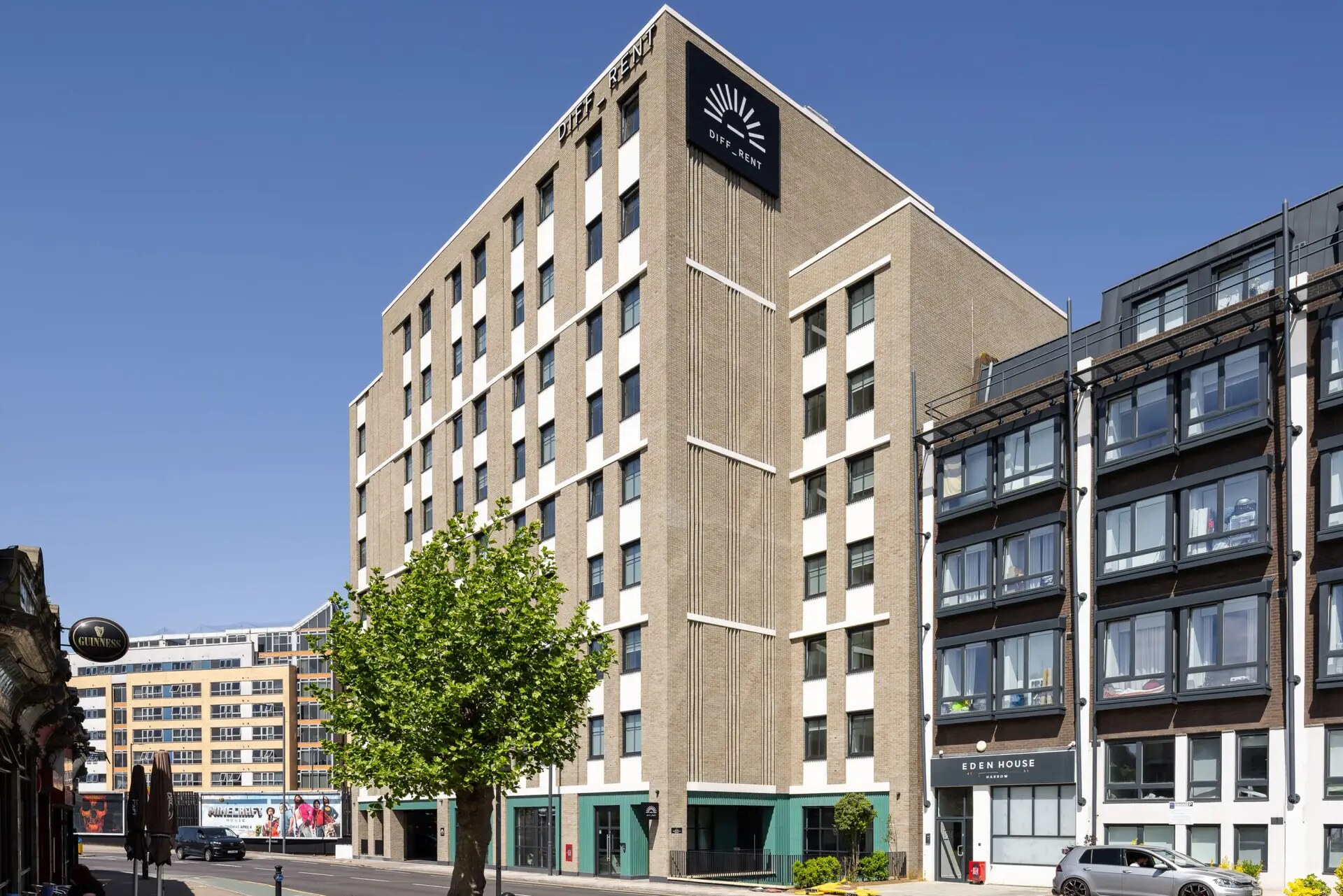
Through our live operating asset, DIFF_RENT Harrow, we possess real-time operational data, live cost benchmarks, and direct insight into London renter behaviour. We don't advise operators from the sidelines; we are operators actively managing these challenges every day.
Selecting a Co-Living Operator and Owner Alignment
When selecting an operating partner, institutional owners should look beyond slick marketing presentations. The critical factors are commercial alignment, financial literacy, and proven capability in the specific asset class.
Can the operator explain their cost-per-occupied-unit with precision? Do they understand how to conduct variance analysis against an institutional budget? How exactly do they balance the competing demands of resident experience and operating margin?
DIFFRENT Living was created from the owner's side of the table. Our entire platform is built around asset performance, ensuring that every operational decision is evaluated against its impact on the property P&L. Our economics are designed to align with yours: we earn more when the asset performs better.
Discuss Your London Asset
Whether you are in the planning stage of a new development, preparing for mobilisation, or seeking to replace an underperforming operator on an existing asset, our commercial team is ready to discuss how our platform can drive performance.
Contact Our Commercial TeamFrequently Asked Questions
Who is DIFFRENT Living’s London co-living service for?
DIFFRENT Living is a co-living operating platform for property owners, institutional investors, landowners and developers in London and the South East. Services span operational design, mobilisation, lease-up, revenue management, day-to-day operations and owner reporting. DIFFRENT Living is the operating platform behind DIFF_RENT, our resident-facing co-living brand. White-label operations are also available.
How much does a co-living operator in London cost?
Commercial terms are discussed privately and agreed for each asset. Scope, responsibilities and budgets reflect the project, service requirements and owner objectives. Contact DIFFRENT Living to discuss an operating partnership.
Can DIFFRENT Living replace an existing London co-living operator?
Yes. DIFFRENT Living offers operator replacement and takeover support. The scope should address the existing management agreement, resident communications, staffing, supplier contracts, systems, compliance records and reporting handover. Timing and responsibilities are agreed after reviewing the asset and its current arrangements.
What is the difference between a co-living operator and a property manager?
A traditional property manager typically focuses on the physical fabric of the building, statutory compliance, and basic rent collection, often operating reactively. A specialist co-living operator acts much more like a hotel manager: taking proactive responsibility for intense resident marketing, dynamic revenue management, curation of community programming, management of complex shared amenities, and taking total ownership of optimising the asset's Net Operating Income (NOI).
Does DIFFRENT Living take a master lease?
No, we operate under a Management Agreement structure. Unlike a master lease, this keeps operating income and property-level costs with the owner. Scope, responsibilities and commercial terms are discussed privately and agreed individually for each asset.
Can you operate an asset under our own proprietary brand?
Yes. Through our White-Label operating model, we work invisibly behind your proprietary brand identity. We provide the comprehensive operational platform, site-level staffing, and technology systems, allowing you to build and retain equity in your own brand name while relying on our specialist execution.
When should we appoint a co-living operator for a new development?
We strongly advise engaging an operator during the early planning or schematic design stages, ideally at least 18 months before practical completion. Early involvement allows us to review the operational design—ensuring the building can be staffed efficiently, back-of-house logistics are viable, and amenities are appropriately sized for the unit count—preventing costly physical alterations later.
How do you handle the initial lease-up period?
We commence pre-leasing marketing campaigns several months prior to opening. Our dedicated leasing teams utilise digital acquisition funnels and dynamic pricing to absorb stock rapidly. However, we balance this velocity against yield, tracking net effective rent to ensure we do not artificially suppress the asset's long-term capital value through excessive discounting.
Our perspective · 12-slide thesis
The case for managed co-living.
Explore the resident offer, local demand, total living costs and the operating economics owners should assess. Our perspective on London and the South East.
PDF · 12 pages · 1.1 MB. A qualitative sector perspective, not an investment recommendation or market-data report.